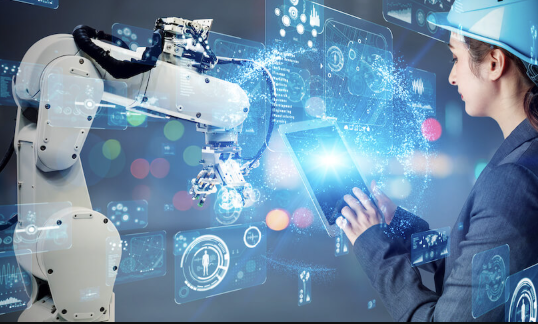
The integration of robotics and artificial intelligence is transforming operational paradigms across multiple sectors. This convergence enhances efficiency and decision-making capabilities, enabling automation in areas such as healthcare, manufacturing, and retail. However, it also raises significant challenges related to job displacement and ethical dilemmas surrounding privacy. As industries grapple with these complexities, the implications of this technological evolution warrant careful examination. What will be the long-term effects on society and the workforce?
Current Trends in Robotics and AI Integration
As industries increasingly embrace automation, the integration of robotics and artificial intelligence (AI) has emerged as a pivotal trend shaping the future of technology.
Robotic automation enhances operational efficiency, while sophisticated AI algorithms optimize decision-making processes. This convergence fosters innovation, enabling greater flexibility and responsiveness in production environments.
Consequently, the synergy between robotics and AI positions businesses to navigate complex challenges with unprecedented agility.
Impact on Various Industries
The integration of robotics and artificial intelligence (AI) is profoundly transforming various industries, fundamentally altering operational frameworks and business models.
In healthcare automation, patient care is enhanced through AI diagnostics.
Manufacturing efficiency is achieved with robotic precision, optimizing production lines.
Retail personalization elevates customer experiences through tailored recommendations, while transportation safety is bolstered by autonomous systems, minimizing human error and improving overall reliability.
Challenges and Ethical Considerations
Numerous challenges and ethical considerations emerge from the integration of robotics and artificial intelligence into various sectors.
Job displacement raises concerns about economic stability, while privacy concerns complicate data handling.
Decision-making ethics require frameworks that ensure fairness, and accountability issues challenge the assignment of responsibility in automated systems.
These factors necessitate careful evaluation to foster a balanced coexistence of technology and human values.
See also: How Foals Are Raised for Racing
Future Possibilities and Innovations
Integrating robotics and artificial intelligence presents a landscape ripe with potential innovations that could transform multiple industries.
Future advancements may lead to highly autonomous systems capable of performing complex tasks with minimal human intervention.
Smart machines could revolutionize sectors such as healthcare, manufacturing, and logistics, enhancing efficiency and safety.
Continuous research and development will unlock new possibilities, fostering a paradigm shift in technology and human interaction.
Conclusion
The integration of robotics and artificial intelligence stands at a crossroads, where unparalleled efficiency meets profound ethical dilemmas. As industries experience unprecedented advancements—ushering in a new era of automation—concerns about job displacement and accountability loom large. This juxtaposition of innovation and caution underscores the critical need for a balanced approach, where the promise of enhanced capabilities does not overshadow the fundamental human values that must guide these transformative technologies into the future.